

I have always enjoyed tracking import numbers in Poland. You see small ways the Polish game changes and evolves when coaches and players from different nationalities start to have a strong presence in the league.
Over the past 10 years, there have been a lot of changes in import numbers. Russians used to make up the highest number of imports playing in Poland by far. After the Russian invasion of Ukraine, the number dropped to 0. No Russian has played in the league since there were 40 during the 2022 season.
That created a large gap of talent which has quickly become filled by Finland. It has become a running joke in the league that every time a Finnish player hits free agency anywhere, Polish clubs will come calling. The number of Fins in Poland has even attracted media attention back in their home country.
Before 2019 there was not a long history of Finnish and Polish hockey crossover. That would start to change after Tomek Valtonen came to coach in Poland, who would bring acclaimed coach Risto Dufva with him. They started to bring in Finnish players to supplement their lineup. Those Fins found a league that pays similar or more to the second level of Finland, while also having a lower cost of living in the country. Since then the numbers have exploded with a few top clubs having a similar number of Poles and Fins. The coaching ranks are dominated by Finnish leaders with five behind the bench in 2025, while there were only two Polish head coaches.
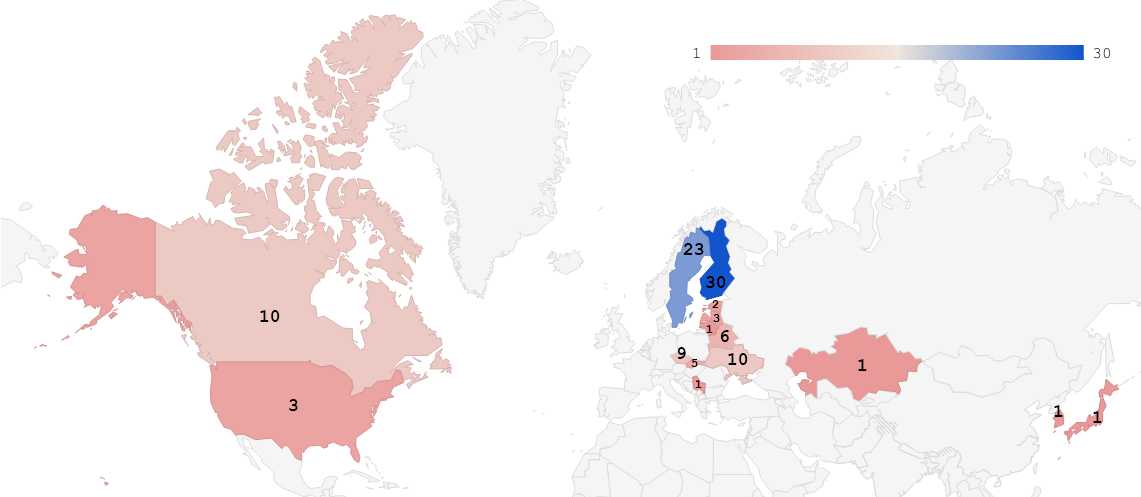
Another recent trend sees a growing number of Swedish players. That one doesn’t seem to have as direct of a cause with no Swedish coaches in the THL. From 2015 to 2022, there were never more than three Swedish players that played 5 or more games in the THL; the past three seasons saw 13, 19, and now 23 Swedes appear.
The biggest drop outside of Russian players is those from Czechia. From 2015 to 2021 there was always 20 plus Czech players in the league, topping out at 35. From 2022 to 2024 it was in the range of 13 to 19. In 2025 only nine players from Czechia called the PHL home.
In total, 106 import players from 16 different countries played in Poland this year. The number of Czech (9), Slovak (5), and Latvian (3) players continues to drop. The only new country for 2025 was South Korea, as Sang Hoon Shin signed with Zaglebie Sosnowiec prior to the playoffs. While Fins are the most common import overall, there were only two teams were Finnish players were the most common import, GKS Tychy and JKH GKS Jastrzebie. Swedish players were the most common on Cracovia Krakow, KH Torun, and Unia Oswiecim. For the rest of the league, Canadians were the most common for GKS Katowice, Belarusians for Podhale Nowy Targ, Ukrainians for STS Sanok, and Czechs for Zaglebie Sosnowiec.
Imports make up a big part of the league, but what about the Poles? There has been a lot of concern about the drop in Polish players. Obviously, limited and no import rules have had an impact on that. But is this a decline, a trend of Polish players disappearing, or is there more to it?
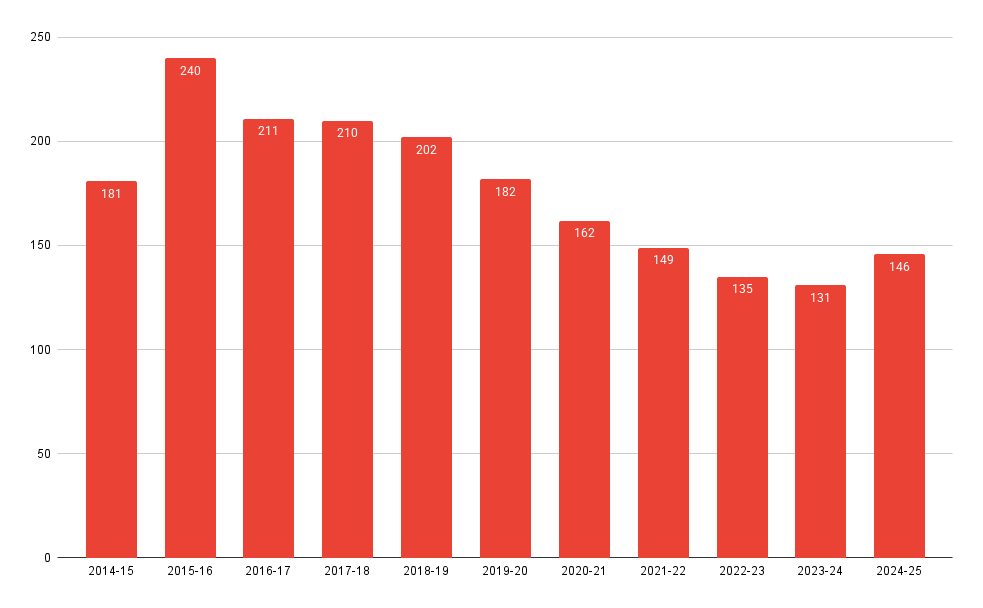
2025 is the first season we have seen the number of Polish players increase at Poland’s top level since 2016. While that sounds great, its unfortunately not due to Polish players raising their level of play. Both Podhale Nowy Targ and STS Sanok faced major financial problems this season which forced them to play young lineups full of Poles on junior contracts. Just looking at the number of imports the two clubs had in 2024 versus 2025 and you find where most of the added Poles found their opportunity. While maybe the circumstances were not the greatest, it is still good experience for those young players.
As a reminder while the totals are dropping there is a much bigger cause for the decrease in Poles than imports. The disappearance of teams. The number of teams in the THL used to fluctuate yearly, but remained constant at nine over the last four years. Nine is unfortunately the lowest number of teams over the past decade. During the early part of our data, the league was either 11 or 12 teams in most seasons. One of the teams was usually either PZHL U23 or SMS Sosnoweic U20 squad. This meant there was a team of nothing but young Polish players. Removing them obviously takes out a lot of native players. While the number of Polish players has declined, the amount per team is not that big of a drop.
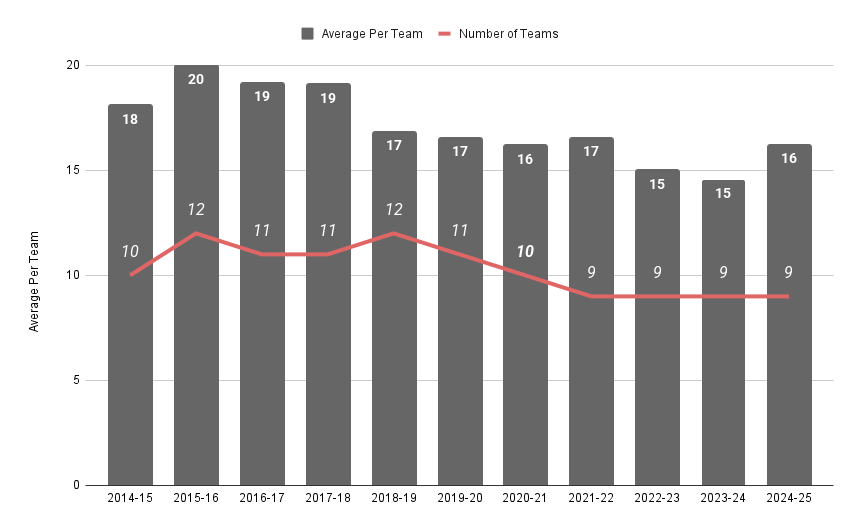
We have only seen a slight decrease in the number of Polish players per team, with a minor increase in 2025. We are likely looking at about 15-18 Polish players who lost their spots due to imports in 2025, when compared to the past. While it definitely sucks whenever Polish players lose their spots. For the health of the sport, it has to happen. When the league introduces better players, it helps improve the rest of the Polish talent in the league, while a better product on the ice is better for fans. We wrote recently about the THL once again rising in attendance, which reflects this. The THL is on the higher side when it comes to other European leagues but is somewhat in line with leagues in a similar tier.
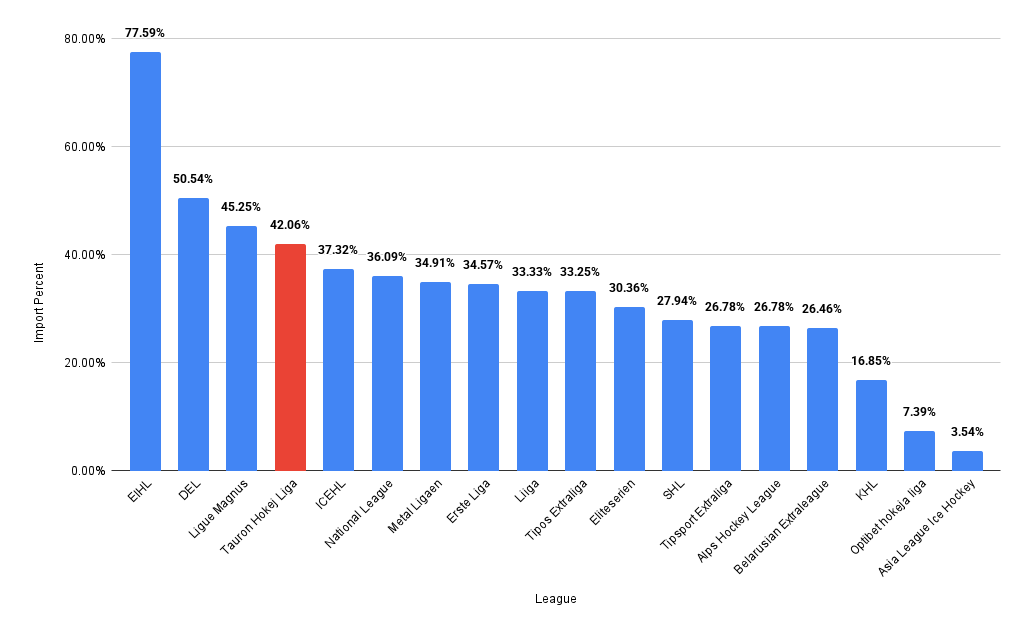
To see the full import data sheet, consider subscribing to our Patreon! That and other materials to boost your knowledge of Polish hockey are available at the $3 tier, and you get to pick an article topic of your choice.
If you want to keep up with all the Polish hockey action, make sure to follow us on Twitter @PolandHockey, like our Facebook page, and add us on Instagram @PolishPuck_. Also, support us on Patreon to help keep the content flowing!
 Polish Puck
Leave a comment